Naengmyeon has been my favorite food for as long as I can remember. The version I fell in love with wasn’t traditional by any means—my grandmother used to boil the dried noodles from a brand called Chungsoo Naengmyeon and mix their instant broth powder with plenty of vinegar and sugar to taste. She always served it with a generous amount of julienned cucumbers and sesame seeds. I’ve made Chungsoo Naengmyeon many times, but no one can replicate that broth concoction quite like her.
What makes cold noodles so fantastic? I think the magic is really in the texture of the noodles. Hot noodles don’t always stay springy or chewy through the end of the meal, if they’re still in soup. But cold ones retain their texture and the chew adds another element to a bowl of noodles. The other major factor is that cold noodles tend to have an acid component, whether the dish comes already seasoned with something like kimchi broth or you have the option to add vinegar to your bowl. This makes naengmyeon incredibly refreshing and keeps me coming back for more.
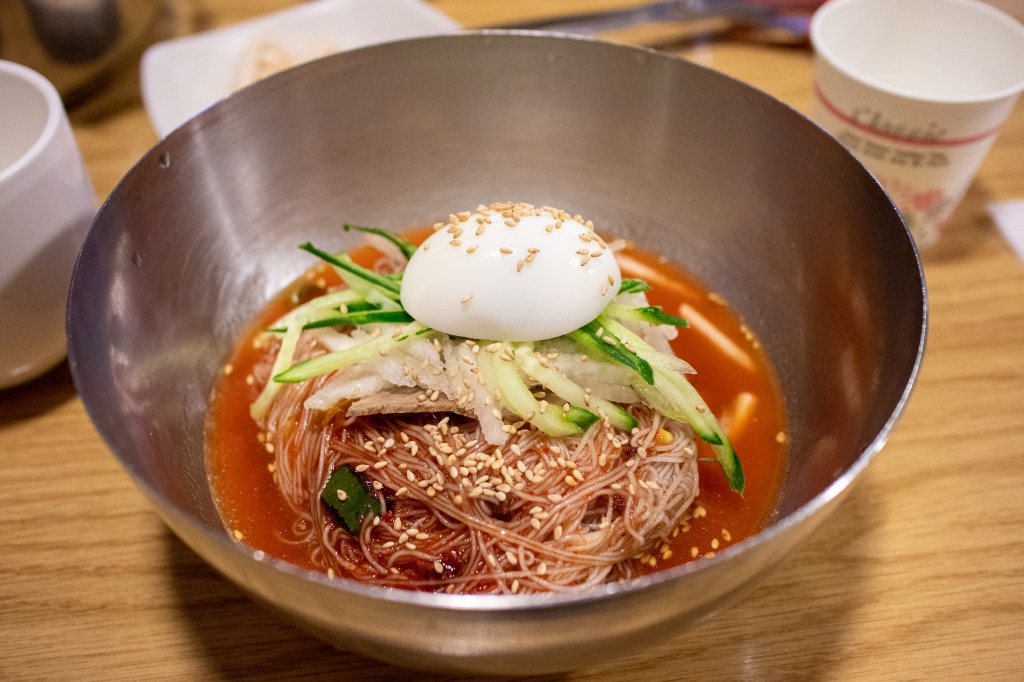
While my love affair with naengmyeon, Korean cold noodles, started in my grandmother’s Bundang apartment, I quickly learned to love other versions too. My family used to say that it was in my genes—naengmyeon is a dish that originated in what is now North Korea, where three of my four grandparents are from. I was so excited to eat good naengmyeon during my recent visit to Korea, given that in my 20 years in the US, I’ve found maybe two restaurants that serve truly delicious naengmyeon.
Naengmyeon can generally be split into types based on what the noodles are made of and whether there’s soup or sauce (or both). Hamheung naengmyeon is identified by potato or sweet potato starch noodles that are extremely thin and quite chewy. This is the naengmyeon I’m most familiar with, and any summer I would visit Seoul, my grandma would take me to get a bowl from Ojangdong Hamheung Naengmyeon. I always get mul naengmyeon, which is served with a chilled beef broth and a few simple toppings.

Depending on the restaurant, mul naengmyeon broth is straight beef broth or beef broth combined with dongchimi, a white kimchi broth. Sometimes you’ll find places that serve dongchimi broth only or a different kimchi broth. As a kid, I definitely preferred the addition of dongchimi in all of my mul naengmyeon bowls because it adds sweetness and tartness, but I can now appreciate the depth and savoriness of beef-only broth. Mul naengmyeon can be doctored up with vinegar and hot mustard, which is how I like to eat it. Bibim naengmyeon is another version with the same type of noodles, but with spicy sauce.
Ojangdong’s signature item is actually the hoe naengmyeon. Instead of cold broth, it’s served with marinated raw fish and spicy bibim sauce. This is the one my parents and any other relatives I come with typically order, and similarly to mul naengmyeon, vinegar and hot mustard can be added. Unlike mul naengmyeon, hoe naengmyeon originated in Hamheung, which makes a lot of sense given that Hamheung is a coastal city with greater access to fish than the birthplace of mul naengmyeon.
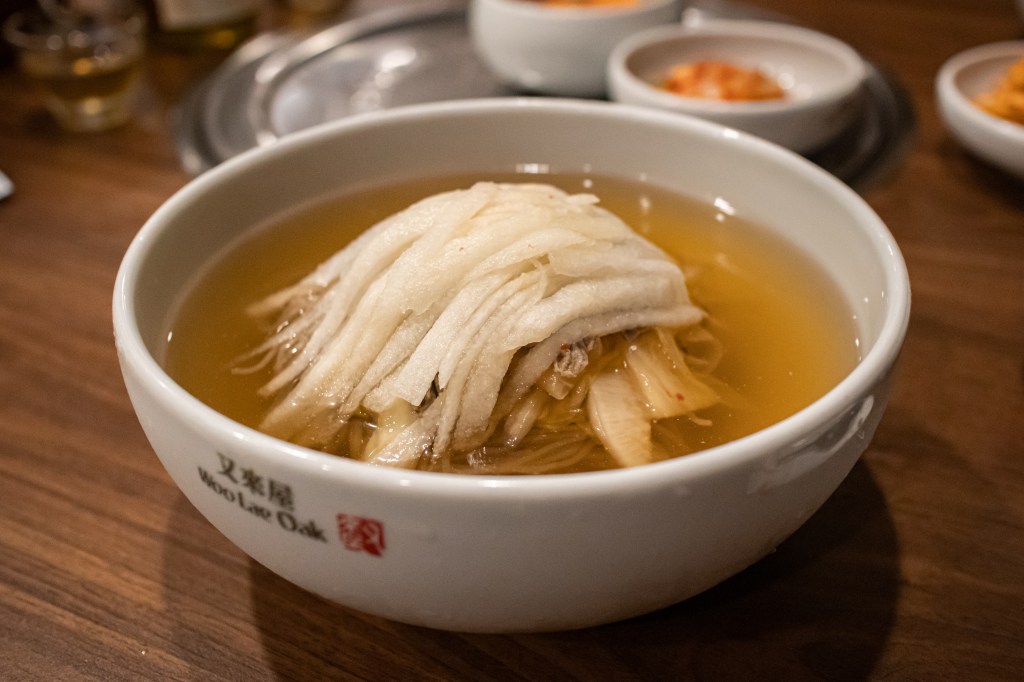
Mul naengmyeon is originally from Pyongyang, the capital of North Korea. Although most Hamheung naengmyeon restaurants offer a mul naengmyeon version, Pyongyang naengmyeon restaurants don’t always have a bibim version. Pyongyang naengmyeon has thicker noodles made from buckwheat, so the texture is springy but not quite chewy. As previously mentioned, it is served with cold broth, though I would say I’ve personally seen more places use beef broth exclusively rather than a blend of beef broth and dongchimi.
Pyongyang naengmyeon is an acquired taste since the flavors are earthy and mild when compared to other cold noodle varieties. This year was the first time I actively sought out Pyongyang naengmyeon, and I chose to go to Woo Lae Oak, arguably the most famous spot for the dish in Seoul. I really liked the naengmyeon here because although the flavors are mild, there’s a prominent beef flavor and a depth to both the broth and the noodles. The generous amount of pear on top doesn’t hurt either.
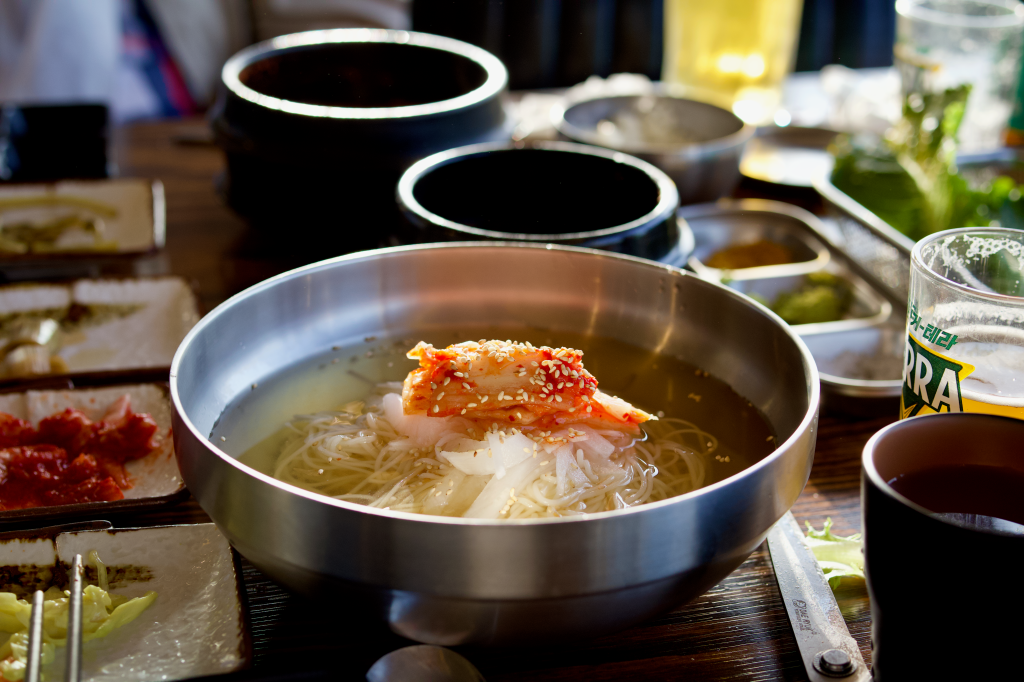
Korean cold noodles don’t end with the standard types of naengmyeon. There are sub varieties, such as yeolmu naengmyeon—naengmyeon served with yeolmu kimchi broth—and naengmyeon made from arrowroot flour. I also tried cold somyeon in kimchi broth during a quick trip to Jeju-do, which I really enjoyed. Making instant ramen into cold almost-naengmyeon dishes has also been popular in recent years too. My newfound favorite is milmyeon, a regional dish in Busan that uses wheat noodles and has both bibim sauce and broth!
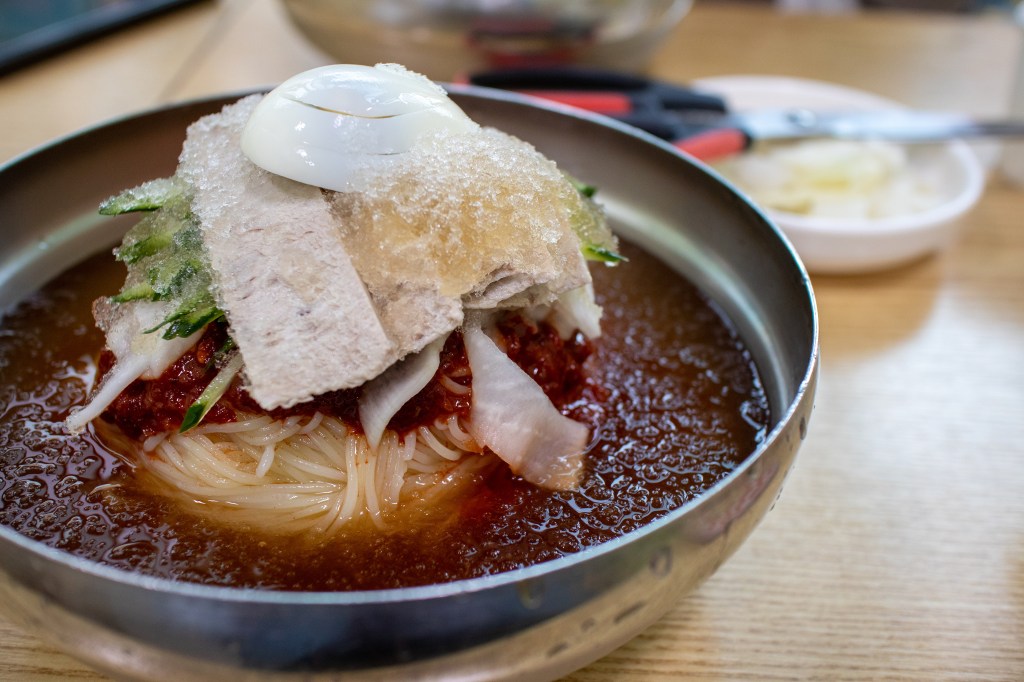
As a self-proclaimed naengmyeon expert, I urge you to try naengmyeon, whether it’s at your local Korean restaurant or ordered online. In the meantime, I’m setting out to find New York City’s best bowl of naengmyeon.
 Shin Hye Away